






















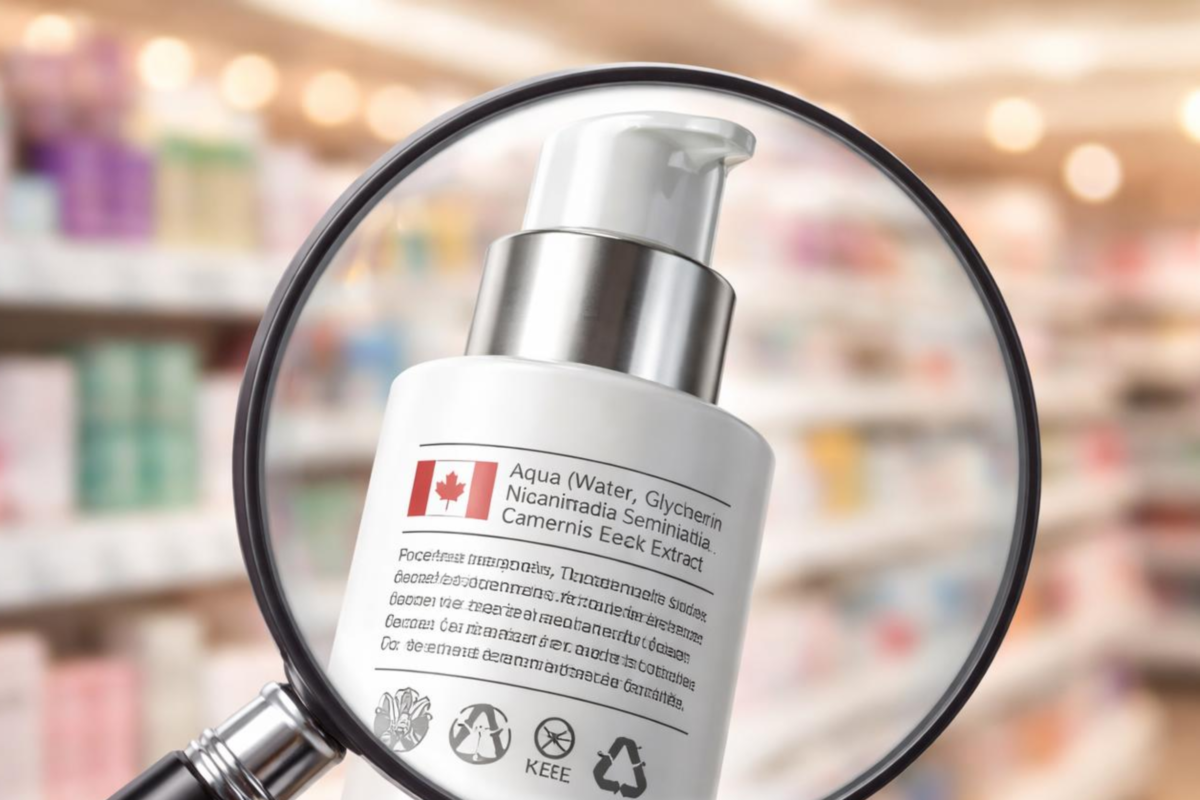
Walk down any beauty aisle and you will see a strange mix of hard facts and soft promises. One bottle gives you a precise ingredient list. The next says “hypoallergenic,” “clean,” or “dermatologist-tested” and leaves you to guess what that really means. That gap between what sounds reassuring and what is actually regulated is where a lot of consumer confusion lives.
Canadian cosmetic rules try to narrow that gap, but they do not erase it. Some parts of a cosmetic label are tightly controlled. Others are mostly marketing language, unless they drift into something false, misleading, or related to health and safety. If you have sensitive skin, allergies, or just a healthy suspicion of vague claims, that distinction matters.
I think this is where people often get frustrated. They assume every word on a package has a legal definition behind it. In reality, some terms do. Many do not. So the smart move is to know which parts of a cosmetic label are mandatory, which claims should raise an eyebrow, and where Canadian regulators draw the line.
Start with the basic rule: a cosmetic cannot pretend to be a drug
In Canada, advertising for a cosmetic has to fit the legal definition of a cosmetic under the Food and Drugs Act. That sounds dry, but it has a very practical result. A face cream can promise softer-looking skin. It cannot legally act like a medicine if it is being sold as a cosmetic.
That means claims in ads and on labels must be accurate and not misleading. A subjective claim like “you’ll look more radiant” may be tolerated because it is personal and hard to measure, as long as it does not cross into deception. But a therapeutic claim is a different thing entirely.
If a product claims to treat acne as a medical condition, alter body functions, prevent disease, or heal a skin disorder, that is not ordinary cosmetic language anymore. In Canada, those types of claims belong to products regulated as drugs or natural health products. Those products carry identifying numbers such as a DIN, which is a Drug Identification Number, or an NPN, which is a Natural Product Number.
So if a serum claims to treat eczema or change how your body functions, and there is no DIN or NPN on the package, that is a reason to pause. Consumers do not need to become regulators, but a little skepticism is healthy here.
There is some oversight on the advertising side too. Advertising Standards Canada pre-screens radio and television ads. Health Canada may step in on print advertising if there are serious safety concerns. That does not mean every shaky beauty claim is caught before it reaches you. It means there are some guardrails, especially when health risk enters the picture.
Marketing words often sound stronger than the law makes them
This is probably the most confusing part of cosmetic transparency. Many popular marketing terms are not specifically regulated by Health Canada unless they touch health or safety. False or misleading claims can still attract attention from the Competition Bureau under the Competition Act and the Consumer Packaging and Labelling Act, but that is not the same as having a precise legal definition for every buzzword.
A few common examples show how messy this can get.
“Fragrance-free” and “unscented” sound simple, but they are not identical. A fragrance-free product may mean no fragrance ingredients were added. An unscented product may still contain ingredients used to mask odor. Those masking agents might appear in the ingredient list by their own names, or they may be rolled into “fragrance” or “parfum.” If you see “fragrance” or “parfum” on the label, the product contains a fragrance or masking system, whatever the front label suggests.
“Hypoallergenic” feels comforting, especially for people with reactive skin. But it is not a legal or scientific guarantee. It usually means the manufacturer chose ingredients that are thought to have lower allergy potential. That is all. No cosmetic can honestly promise that nobody will react to it, because truly non-allergenic cosmetics do not exist.
“Preservative-free” sounds clean and simple, yet it comes with tradeoffs people rarely think about. Preservatives help prevent the growth of bacteria, mold, and yeast. Cosmetics often live in warm, damp bathrooms. Fingers go into jars. Mascara wands go back into tubes again and again. Without preservatives, contamination risk rises fast. So “preservative-free” is not automatically better. Sometimes it is just risk dressed up as purity.
“Dermatologist-tested” and “ophthalmologist-tested” also get more credit than they deserve. These phrases usually mean some form of testing involved a skin or eye specialist, often to check irritation or safety. They do not prove a product works. They also do not follow a single standardized Canadian testing protocol. One company may have robust data. Another may have something much thinner behind the claim.
“Organic” is another word people often overread. In practice, it usually points to ingredients or products certified under some organic standard, often suggesting that most of the content is certified organic. But certification systems vary by jurisdiction, and a label may refer to the product as a whole or just certain ingredients. It is not a universal shorthand for safer, better, or less irritating.
Then there is “cruelty-free” or “not tested on animals.” Canada banned animal testing for cosmetics effective December 22, 2023. That changed the conversation, but it did not turn these claims into empty decoration. If a company makes a no-animal-testing claim, whether with words or imagery, it needs proof. The Minister of Health can request evidence if a claim appears false, and consumers can file complaints if they suspect a company is misrepresenting it.
The ingredient list usually tells you more than the front label
If there is one part of cosmetic transparency that genuinely helps people, it is mandatory ingredient labelling. Canadian rules require cosmetics to list all ingredients on the label, using INCI names.
INCI stands for International Nomenclature of Cosmetic Ingredients. The names can look technical, even a little hostile. I get why people find them intimidating. But they solve a real problem. A single ingredient can be sold under multiple trade names, brand names, or informal names. INCI gives it one standardized identity.
That matters for allergy tracking, medical advice, and incident reporting. If your dermatologist tells you to avoid methylisothiazolinone, or your allergist flags a specific fragrance allergen, the INCI system gives you a common name to look for. It also helps healthcare providers and consumers speak the same language when something goes wrong.
When people say, “I wish brands would just use plain English,” I understand the impulse. But the standardized name is often more useful than a simplified nickname, especially when ingredient identity has to be exact.
If you want more detail about what an ingredient is doing in a product, the label should also give you a way to ask. Canadian labelling rules require contact information for consumer inquiries, along with the identity and principal place of business of the dealer. That is not glamorous, but it is one of the most practical consumer protections on the package.
What a compliant Canadian cosmetic label should include
A cosmetic label in Canada has to be readable, understandable, and contain specific information. The rules come from the Food and Drugs Act, the Cosmetic Regulations, and the Consumer Packaging and Labelling Act and its regulations.
At minimum, you should expect to find:
-
The common name or identity of the product, such as moisturizer or hairspray.
-
The net quantity, shown in metric units or by count.
-
A complete ingredient list using INCI names.
-
Warnings or cautions, when needed.
-
Directions for safe use, when needed.
-
Contact information for consumer questions.
-
The identity and principal place of business of the dealer.
Required label information must appear in both English and French, with one notable exception. Ingredient names follow INCI conventions and may not look like ordinary English or French, but they are standardized internationally.
Some products face extra rules. Hair dyes and tooth whiteners are good examples. Other laws can add labelling duties too, including the Canadian Environmental Protection Act, 1999 in some cases. So even though “cosmetics” sounds like one category, the details can vary by product type.
There is another rule worth remembering because it sounds obvious but matters a lot: false or misleading statements and deceptive packaging are prohibited. A package should not create a false impression through wording, design, or presentation.
Fragrance is where transparency has improved, but not completely
Fragrance is one of the biggest pain points for people with sensitivities. It is also one of the hardest areas to decode from a label.
In Canada, a cosmetic label can use the term “parfum” to indicate fragrance or a fragrance mixture. Companies have not been required to fully disclose every component of those mixtures, partly because fragrance formulas are treated as proprietary and partly because full listing can get complicated fast.
The problem is obvious. Some fragrance ingredients can trigger allergic skin reactions, yet the catch-all word “parfum” does not tell you which ones are present.
This is where Canadian rules have started to move in a more useful direction. Canada is phasing in fragrance allergen disclosure rules that mirror European approaches. Beginning April 12, 2026, 24 fragrance allergens must be listed individually when they appear above certain thresholds: above 0.001 percent in leave-on products and above 0.01 percent in rinse-off products. Beginning August 1, 2026, that list expands to 81 fragrance allergens for new cosmetics. Existing products must meet the expanded disclosure rules by August 1, 2028 when those allergens are present above the same thresholds.
That is real progress, especially for shoppers trying to avoid specific triggers. But it does not mean fragrance mystery disappears overnight. If a product contains “parfum,” it still signals that fragrance materials are present, and depending on concentration, not every component must appear separately. For sensitive-skin shoppers, “parfum” is still a flag worth taking seriously.
Safe ingredients are allowed, unsafe ones are not, but “natural” is still a trap word
Under Canadian law, cosmetic ingredients are allowed only if they do not pose an unreasonable risk to health or safety when the product is used as directed. That is the standard. Canada also maintains the Cosmetic Ingredient Hotlist, which identifies ingredients that are prohibited or restricted.
The Hotlist is useful because it gives consumers and industry a clearer sense of what is off-limits or tightly controlled. It is not a shopping guide, exactly, but it helps explain why certain ingredients disappear, change concentration, or carry warnings.
What it does not do is settle the natural-versus-synthetic argument, which is still strangely emotional. People often assume natural ingredients are gentler or safer. Sometimes they are. Sometimes they are not. Poison ivy is natural too.
In many cases, a natural ingredient and its synthetic version are chemically identical. Synthetic versions may even be purer or more stable, which can improve shelf life and consistency. Health authorities do not treat natural and synthetic ingredients as moral categories. They look at safety.
I think this is one of those places where beauty marketing has trained people to trust the story more than the chemistry. The story is usually prettier. The chemistry is usually more useful.
A practical way to read a cosmetic label in Canada
You do not need to memorize legislation to shop more carefully. A simple routine is enough.
When you pick up a product, first check what the product says it does. If it sounds like a treatment for a medical condition or a product that changes body functions, look for a DIN or NPN. If there is none, be cautious.
Next, scan the ingredient list, especially if you have allergies, sensitivities, or a history of irritation. Ignore the soothing front-label language for a moment and look at the actual INCI names. If you are avoiding fragrance, “parfum” or “fragrance” still matters. If you have been told to avoid a specific substance, this is where you find it.
Then look for the basics that every proper label should carry: product identity, net quantity, contact information, dealer identity, warnings, and safe-use directions if needed. Missing details are not always proof of a problem, but they are not a great sign either.
After that, treat marketing terms as clues, not conclusions. “Hypoallergenic,” “dermatologist-tested,” “organic,” and “preservative-free” each tell a partial story. None should end your investigation.
Finally, keep the company contact details. If you react to a product, have ingredient questions, or suspect a misleading claim, those details matter more than people realize.
What transparency really looks like for Canadian shoppers
Cosmetic transparency in Canada is not perfect, but it is more solid than the front label alone might suggest. The strongest protections tend to be the least glamorous ones: mandatory INCI ingredient lists, bilingual required information, contact details, safe-use directions, and limits on misleading or therapeutic claims.
The weaker area is the language that sounds scientific or reassuring without being tightly defined. That is where consumers still need to read carefully and think critically.
If you have sensitive skin, this matters even more. A “hypoallergenic” label cannot replace checking ingredients. An “unscented” claim does not necessarily mean no fragrance-related materials are present. A “preservative-free” formula may create contamination risks that are easy to overlook. And a product that talks like a treatment without a DIN or NPN deserves skepticism.
In other words, the most honest part of a cosmetic package is often the smallest print. That is annoying. It is also useful to know. Once you stop treating the front label as the whole truth, Canadian cosmetic rules make a lot more sense.