




















Acne scars can feel frustratingly permanent. You may have cleared the breakouts years ago, yet the indentations, rough patches, redness, or enlarged-looking pores are still there every time you catch your reflection in direct light.
Microneedling is one option often considered for these concerns. It is a minimally invasive skin rejuvenation treatment that uses very fine needles to create controlled micro-injuries in the skin. The idea sounds intense, admittedly. In practice, the treatment is usually well tolerated with topical numbing, and recovery is fairly short for most people.
Still, microneedling is not a magic eraser. It works gradually, it usually takes a series of treatments, and results depend a great deal on the type of acne scars, your skin’s healing response, and your aftercare. Understanding those details helps you decide whether it is worth your time and money.
What microneedling actually does to the skin
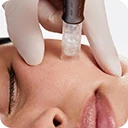
Microneedling uses a device with sterile, calibrated needles that move across the skin at a controlled depth. These needles create thousands of microscopic channels in the upper layers of the skin.
Those channels start the body’s normal wound-healing process. Growth factors are released, fibroblast cells become more active, and the skin begins producing new collagen and elastin. Collagen gives skin structure and firmness. Elastin helps it bounce back.
As the skin rebuilds over time, several changes may become visible:
-
Depressed acne scars can look shallower and softer.
-
Fine lines may become less noticeable.
-
Skin texture may feel smoother.
-
Makeup may sit more evenly.
-
Pores can appear less prominent, especially when rough texture and oil congestion have made them look larger.
Microneedling also temporarily increases the skin’s permeability. In the days immediately after treatment, the skin may absorb certain products more readily. That is not an invitation to apply every active serum in your cabinet, though. Freshly treated skin is more vulnerable to irritation, so only use products recommended by the clinician performing your treatment.
Why collagen matters for acne scars
Many acne scars are caused by inflammation damaging collagen during an active breakout. When the inflammation heals, the skin may not produce enough structural tissue to fully fill the area back in. The result is an indentation.
The acne scars that tend to respond best to microneedling include rolling scars and some boxcar scars. Rolling scars create gentle, wave-like dips in the skin. Boxcar scars are broader depressions with clearer edges. Microneedling can gradually encourage collagen formation beneath these scars, helping blend them more smoothly into surrounding skin.
Ice-pick scars are different. These are narrow, deep scars that resemble tiny punctures. They often need a more targeted approach, such as chemical reconstruction of skin scars, sometimes called TCA CROSS, punch excision, or laser resurfacing. Microneedling may still help surrounding texture, but it is usually not the main treatment for deep ice-pick scars.
Raised scars, including hypertrophic or keloid scars, also require individual assessment. Creating intentional micro-injuries is not always appropriate for skin that has a tendency to form excess scar tissue.
This is why a proper consultation matters. “Acne scarring” is a broad label, but scar types can look very different under close examination.
Can microneedling shrink pores?
Pores do not literally open and close, and there is no treatment that permanently removes them. Their appearance is influenced by genetics, oil production, sun exposure, congestion, skin laxity, and the amount of collagen supporting the pore walls.
Microneedling can make pores look smaller by improving the texture and firmness around them. When skin has more structural support, pore edges may appear tighter and less shadowed. The change is usually most noticeable on cheeks, near the nose, and in areas with old acne scarring.
The results tend to be subtle rather than dramatic after one appointment. People often notice that their skin looks smoother first. Pore refinement may become more apparent as collagen remodeling continues over the following months.
If large pores are mostly related to persistent oiliness, blackheads, or active acne, a treatment plan may need to include acne management and a practical skincare routine as well. No procedure can outwork ongoing inflammation.
What a typical microneedling appointment feels like
A standard treatment often takes 30 to 60 minutes, including preparation and topical numbing. The actual needling portion is generally much shorter.
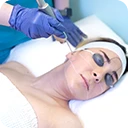
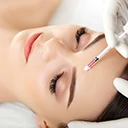
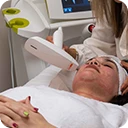
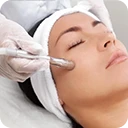
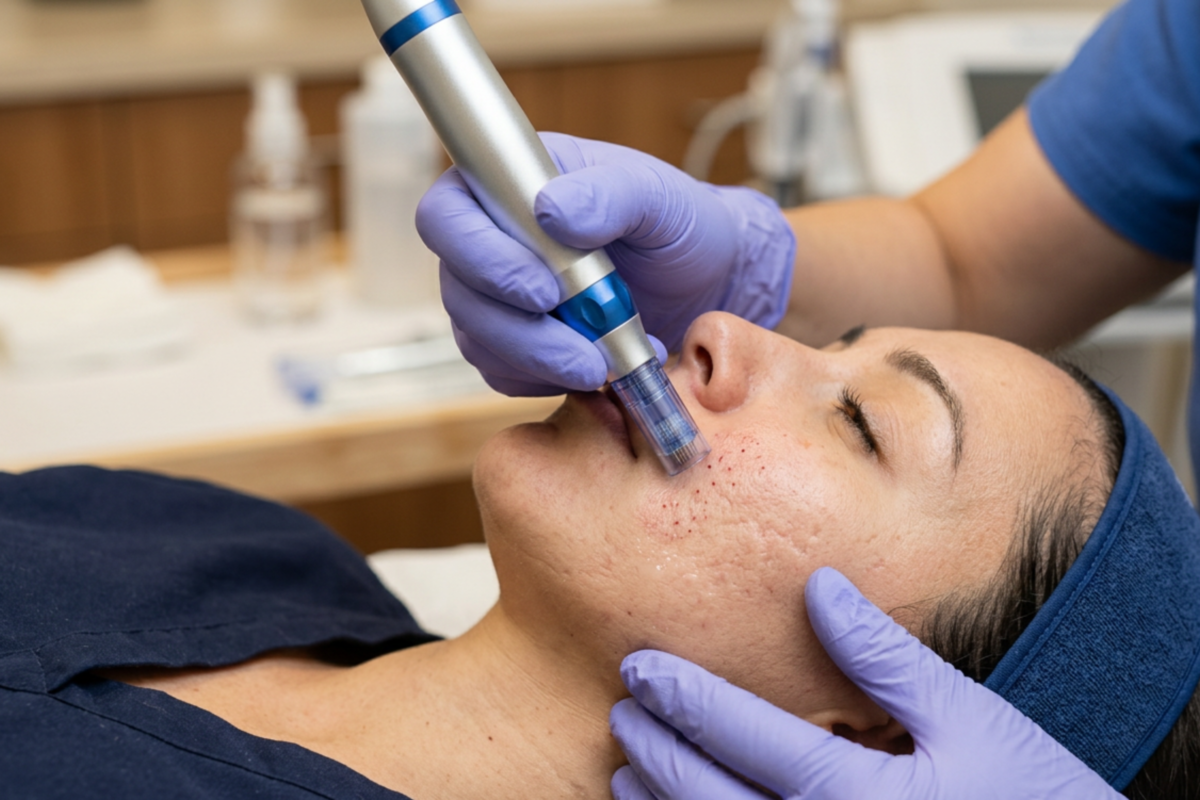
After cleansing the skin, a clinician applies a topical anesthetic and allows it time to work. Once the skin is numb, the microneedling device is passed methodically over the treatment area. The depth can be adjusted according to the area being treated and the concern being addressed.
Most patients describe the sensation as a light scratching, vibration, or fine sandpaper moving across the skin. Sensitive areas, such as the forehead, upper lip, and around the nose, may feel more intense than the cheeks.
There may be pinpoint bleeding with deeper treatments for acne scarring. This can be normal in a clinical setting, but it should not be confused with aggressive treatment being automatically better. Needle depth and technique need to match the condition being treated. Overdoing it can increase irritation, prolong recovery, and raise the risk of unwanted pigment changes.
How many treatments are usually needed?
For general texture concerns or early fine lines, some people see a modest improvement after a single session. Acne scars usually call for patience.
A common plan is three to six treatments, spaced about four to six weeks apart. The interval gives the skin time to heal and begin producing new collagen before the next session.
Results tend to develop in stages:
The first week
Once the initial redness settles, skin may look brighter and feel smoother. This early change is often partly due to hydration and mild swelling. It is pleasant, but it is not the full collagen result.
Four to six weeks after treatment
This is when many people begin seeing more meaningful changes in texture, tone, and fine lines. Shallow scars may look a little less defined.
Several months into a treatment series
Collagen remodeling takes time. Improvements in acne scars often become more noticeable after multiple sessions, and the skin may continue changing for several months after the final treatment.
It is tempting to judge the outcome after a few days. Try not to. Microneedling is a slow-build treatment. That is part of its appeal for some people and part of its annoyance for others.
What results are realistic?
Microneedling can improve skin quality, but it rarely creates perfectly smooth, filter-like skin. That expectation is particularly unhelpful for acne scars, which often need more than one kind of treatment.
A good result may look like softer scar edges, a more even surface, less visible fine lines, and pores that are less obvious in daylight. Friends may say you look well-rested rather than asking what treatment you had. For many people, that is exactly the point.
The degree of improvement varies based on several factors:
-
The type, depth, and age of the acne scars
-
Whether active acne is still present
-
Skin tone and history of post-inflammatory hyperpigmentation
-
Smoking status, sun exposure, and overall healing
-
The treatment depth and technique
-
The number of sessions completed
-
Whether microneedling is combined with other appropriate treatments
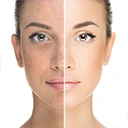
Before-and-after photographs can be useful when evaluating a provider’s work, but view them with a critical eye. Lighting, facial expression, angle, skincare, and the amount of time between photos all affect how scars and pores appear. Look for consistent lighting and comparable angles. Unretouched images are helpful, though they still only show individual outcomes.
Microneedling recovery: what the first week often looks like
Downtime is usually limited, but the skin needs gentle care while its barrier recovers.
Day 1
Redness and sensitivity are common. Many people compare the look and feeling to a moderate sunburn. The skin may feel warm, tight, or mildly swollen. Keep the area clean and avoid unnecessary touching.
Day 2
Redness often starts to fade, though some people remain pink longer, especially after deeper treatment. Dryness and tightness can become more noticeable. Use a gentle moisturizer and broad-spectrum sunscreen.
Days 3 to 5
The skin may feel rough or begin lightly flaking. This is normal for many patients. Avoid exfoliating, scrubbing, or picking at peeling skin. Picking can lead to irritation and pigment changes.
Around day 7
Most people can return to their usual skincare routine gradually, if the skin is calm and the clinician has approved it. Skin may already appear smoother, while the deeper collagen response continues quietly for weeks.
Many people can resume light makeup after 24 to 72 hours, depending on redness, skin sensitivity, and professional guidance. If possible, give your skin more time without makeup. Freshly treated skin does not need extra products pressed into it.
Post-treatment care that protects your results
The aftercare is simple, but it matters. Think of it as protecting a healing barrier rather than chasing an instant glow.
For the first 24 hours, keep the skin clean and avoid makeup, heavy sweating, hot tubs, saunas, and swimming pools. Use a mild cleanser if instructed and avoid rough towels or cleansing brushes.
For about a week, pause active ingredients such as retinoids, exfoliating acids, scrubs, benzoyl peroxide, and strong vitamin C formulas unless your clinician tells you otherwise. These products are useful in the right context, but newly treated skin can react badly to them.
Daily sun protection is non-negotiable. Apply a broad-spectrum SPF 30 or higher, and limit direct sun exposure while your skin heals. UV exposure after an inflammatory treatment can raise the risk of dark marks, particularly in people prone to hyperpigmentation.
A bland moisturizer, gentle cleanser, and sunscreen may seem boring. Boring is good during recovery.
Who should delay or avoid microneedling?
Microneedling is widely used, but it is not right for every skin concern at every moment. A qualified medical professional should review your health history, current skincare, and skin condition before treatment.
You may need to postpone microneedling if you have:
-
Active acne lesions, cold sores, skin infection, or an open wound in the treatment area
-
A history of keloid scarring or poor wound healing
-
Certain inflammatory skin conditions, such as uncontrolled eczema or psoriasis on the face
-
Recent isotretinoin use, depending on your medical history and clinician’s assessment
-
Recent sunburn or a significant tan
-
A tendency toward post-inflammatory hyperpigmentation that requires a more cautious plan
-
Pregnancy or breastfeeding, where providers may recommend delaying elective procedures based on their protocols
People with deeper skin tones can receive microneedling, but treatment settings and aftercare require care. Hyperpigmentation is not inevitable, yet it is a real concern when inflammation is not managed well. This is one reason experienced clinical oversight is valuable.
Microneedling compared with other scar treatments
Microneedling is often one piece of a broader acne-scar plan.
Subcision may be more useful for tethered rolling scars, where fibrous bands pull the skin downward. Chemical peels can help surface discoloration and mild texture. Fractional laser treatments may deliver stronger resurfacing for some scar patterns but can involve more downtime. Radiofrequency microneedling combines needles with heat energy and may be recommended for certain texture, scar, or tightening goals.
There is no universally “best” option. Anyone claiming one treatment solves every scar type is oversimplifying a complex issue. A thoughtful plan may combine treatments over time rather than repeating the same procedure indefinitely.
Questions worth asking before booking
Before choosing microneedling, ask who will perform the treatment, what device they use, and how they determine needle depth. It is also reasonable to ask whether they have experience treating your skin tone and scar type.
Ask to see relevant before-and-after photos, not just general facial rejuvenation images. If acne scarring is your main concern, look for patients with comparable scar patterns. Discuss expected downtime honestly, including the risk of redness, breakouts, infection, pigmentation changes, or prolonged irritation.
Most importantly, ask what happens if microneedling is not the right match for your scars. A good consultation should leave room for that answer.
The bottom line
Microneedling can be a useful treatment for uneven texture, early lines, enlarged-looking pores, and certain acne scars. It works by supporting the skin’s own collagen-building process, which means improvements arrive gradually rather than overnight.
For the best chance of a satisfying outcome, expect a series of treatments, follow careful post-treatment instructions, protect your skin from the sun, and choose a provider who assesses your scars rather than treating every concern the same way. Smooth, healthier-looking skin is a realistic goal. Perfection is not, and frankly, it was never a fair standard to begin with.