

















January 18, 2024
Custom Orthotics FAQ
What should I expect during my assessment?
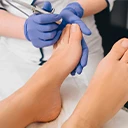
First comes your initial assessment, in which one of our specialists will document your medical history and any possible symptoms or previous injuries. This is done to make sure that your treatment fits you. To further personalize the treatment to your needs, the specialist will also take into account your lifestyle and the footwear you prefer.
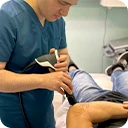
Next comes your examination, and as part of it our specialist will take note of:
- Your posture.
- Your present symptoms and condition.
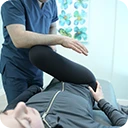
- The alignment, strength, structure and full range of motion of your legs and feet.
- Your footwear for wear patterns and fitting, as well as aesthetics.
The last part of this process is the gait analysis. Simply put, your gait is the way you walk. The foot care specialist will take note of this and identify areas of focus.
Once this assessment is complete, one of our experts will discuss possible treatment options. They will explain all the exact details of the treatment and how it will help meet your specific needs. If you have any questions about the procedure, the specialist will gladly answer them.
Once you’re familiar with your options and if you decide to proceed, our specialist will create a 3D cast of your feet that captures their exact shape and contours in their ideal functional position. At Limelight, we use the latest in casting techniques which include foam box casting, plaster slipper casting, wax molding, contact digitizing and even optical laser scanning for extremely precise models. Simply taking a footprint from an ink pad then recording your shoe size or walking over a pressure plate doesn’t quite get the great results that Limelight aims for, because the methods don’t provide enough information to create truly personalized orthotics.
How long will it take for me to get my orthotics device?
The manufacturing process for your orthotics will take around week. Authentic custom orthotics are created from scratch using raw materials based on the 3D cast of your foot.
When your orthotics are ready, Limelight will inform you and schedule a dispensing appointment to ensure your orthotics fit your footwear and you. In order to ensure that your treatment goes smoothly, our specialist will run another gait analysis while you’re wearing your new orthotics. Any further adjustments to improve the orthotics will be done onsite in order to ensure maximum comfort and function. Before you leave, the foot care specialist will make sure that you’re happy with the way your orthotics feel. We will also provide advice on breaking in, wearing, and taking care of your new orthotics.
What’s covered by my insurance?
Orthotic treatments are often covered by personal and business insurance plans. In order to be eligible for coverage under most Canadian plans, your custom made orthotics must be:
Custom-made: In order to qualify, your orthotic treatment must be manufactured from scratch using raw materials, created from a three-dimensional cast of your feet.
Prescription: Most insurance policies require a prescription by a specific health care professional – be it a doctor, chiropodist or podiatrist – as a medically-necessary treatment for a foot condition, however some plans allow other health care practitioners to prescribe such treatments. Please refer to your insurance booklet for details.
It’s highly recommended that your orthotics are provided and dispensed by a licensed foot care specialist such as a podiatrist, chiropodist, pedorthist or orthotist. These professionals are specially-trained to assess, design, manufacture, and fit orthotics and footwear and know exactly the treatment you need.
What’s not covered by my insurance?
While orthotics is covered by most Canadian personal health insurance policies, certain specific situations may not apply. If you’re not sure, ask a representative of your insurance company. The following scenarios are often not covered by personal health insurance plans:
- Orthotics or orthopaedic footwear used only for general comfort or convenience.
- “Over the counter” orthotic treatments sold in pharmacies or other retail stores. Examples include cushioned heel cups or mass produced insoles.
- Orthotics that are used for recreational activities or sports.
- Discounted orthopaedic shoes or orthotics.
Is there anything I should watch out for when getting orthotics?
There are many “one size fits all” orthotic treatments available without a prescription. While these are good for people who use orthotics for general comfort or for sports. If you’ve been prescribed orthotics for a medical reason you should avoid purchasing orthotic solutions in the following scenarios:
- Temporary situations: Medical orthotics are custom made for each specific case. Arrangements like home or trade show exhibits, kiosks or health booths in malls or department stores often lack the equipment needed to properly assess the effectiveness of the treatment.
- Online: Similarly to the previous scenario, it is very difficult for you to try on and customize the treatment to your needs if you’re buying it over the internet.
- As part of a group: Group discounts are often found in online stores and temporary situations. Orthotics work best with focus on the individual and their needs, which can be more difficult if you’re buying orthotics in bulk or with a group discount. Some ‘dispensers’ hold mass screenings at work or at home without properly evaluating each person.
- For young children: Orthotics for children under age five aren’t common, since many skeletal or soft tissue injuries that require treatment with custom-made orthotics don’t present in children of that age. Only medical doctors and pediatric specialists are able to prescribe this type of early treatment for very specific conditions.
- As part of a special deal or discount offers: This is analogous to the group discount scenario. Medicinal orthotics are made with extreme care and precision for each individual. Examples include offers of ‘free shoes with the purchase of orthotics’ or ‘two-for-the-price-of-one’ deals.